
Drunk Driving DWI DUI
Drunk Driving DWI DUI
Practice Areas


Long Island DWI and DUI Defense
Most people arrested for DWI have never been in handcuffs before. The arrest is frightening, the paperwork is confusing, and the case starts running immediately in two places at once: the criminal court, and the license process that runs beside it — some of it decided in court, some at the DMV. People who understand the license side early are in a far better position to protect it than people who discover it late.
The Law Offices of Rudolph F.X. Migliore, P.C. defends DWI and DUI charges throughout Suffolk and Nassau Counties. Phones are answered around the clock, and translators are available.

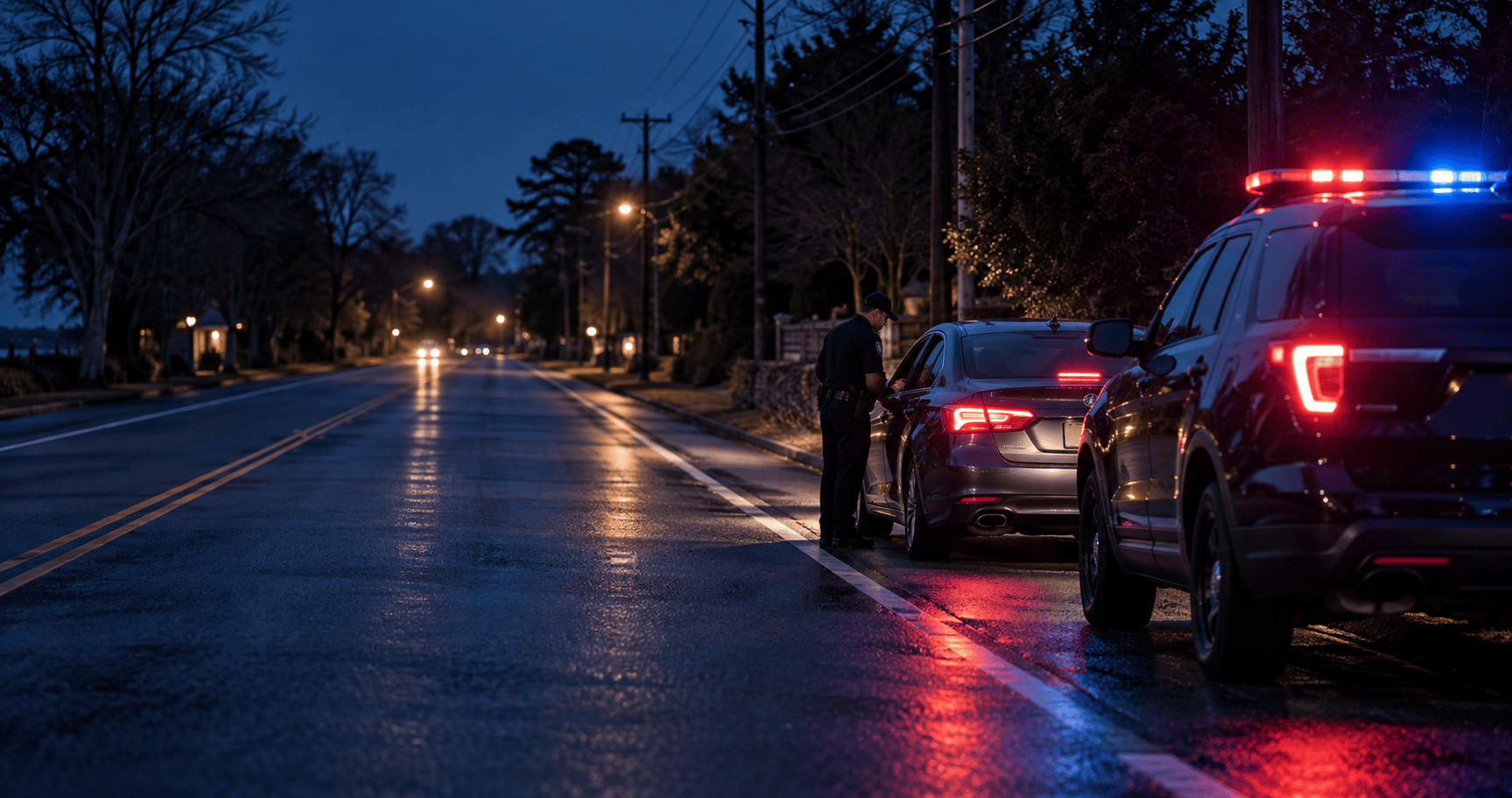
Every DWI case starts at the stop, and so does the defense.
The Charges, Plainly
New York statutes speak in DWI and DWAI rather than DUI, and the law covers a spectrum, and where a case lands on it matters enormously.
- DWAI (alcohol). Driving while ability impaired by alcohol is a traffic infraction, not a crime. It still lands on your DMV record and carries license and insurance consequences, but it is not a criminal conviction, which is a large part of why it figures so often in how drunk-driving cases resolve.
- DWI. Driving while intoxicated, charged two ways: a blood alcohol concentration of .08 or higher, or intoxication shown by the evidence as a whole (the officer’s observations, driving behavior, field tests) with no number required at all.
- Aggravated DWI. A reading of .18 or higher. The label brings stiffer consequences and, just as practically, less room to negotiate: the law restricts how an aggravated charge can be satisfied.
- Drugs, and combinations. Impairment by drugs, or by drugs and alcohol together, is charged under its own subdivisions — cases that often overlap with our drug offenses practice.
Two escalators turn a misdemeanor arrest into a felony case. A second qualifying DWI within ten years can be charged as a felony. DWAI infractions do not count toward it, and which priors qualify is worth checking before anyone uses the word felony. And under Leandra’s Law, driving intoxicated with a child of fifteen or younger in the vehicle is a felony on a first offense.
Your License Is Its Own Fight
This is the part that surprises people. The criminal case decides whether you are convicted of anything; the DMV runs its own proceedings over whether you keep driving, and the two do not wait for each other.
At arraignment, a court will generally suspend the license of a driver whose test showed .08 or more while the case is pending — before anything has been proven. Hardship and conditional driving privileges exist, and pursuing them promptly is part of the job.
If you refused the chemical test, a separate DMV hearing decides whether your license is revoked for the refusal itself — a civil consequence that does not depend on how the criminal case turns out. You can be acquitted and still lose your license at the DMV. The windows around that hearing are short, which is one of the strongest reasons to involve a lawyer in the first days rather than the first weeks.
The Breath Test, and the Refusal
A breath reading looks like the end of the argument. It is actually the beginning of several.
The machines are instruments, and instruments have paperwork: calibration records, maintenance history, operator certification, the observation period before the test. The roadside field sobriety tests are scored subjectively, at night, on a shoulder, by the person who has already decided to make an arrest. And many stops on Long Island are on video now, which means the jury does not have to take anyone’s word for how you actually looked.
If you refused, the refusal has its own consequences, and the prosecution can point to it at trial. But refusals have elements too — whether the warnings were properly given, whether the refusal was persistent — and those are contested at the DMV hearing and beyond.
What a Conviction Carries
Beyond the sentence itself: a criminal record that surfaces on employment and housing checks, an ignition interlock device on any vehicle you own or operate following an alcohol-based DWI conviction, insurance consequences that arrive like a second fine every year, and professional licensing exposure for anyone whose career runs through a licensing board. Our criminal defense overview covers these collateral costs in more depth; for many clients they are the real stakes of the case.
Repeat and Aggravated Cases
The ten-year lookback means a decade-old mistake changes the character of a new arrest. Felony DWI cases move to County Court after indictment, carry state prison exposure, and are handled with a different intensity from the start. Where a crash caused injury, the charges can climb into vehicular assault and beyond — cases that sit at the intersection of DWI law and felony defense practice.
How These Cases Get Defended
Start at the stop: an officer needs a lawful basis to pull a car over, and everything that follows depends on it. Then the video, watched frame by frame against what the paperwork claims. Then the science: the timeline between driving and testing, the machine’s records, the handling of any blood draw. Then the hearings — suppression and refusal — where testimony is locked in under oath before trial.
A large share of DWI cases resolve by negotiation, and the quality of the resolution tracks the quality of the preparation. Some cases should be tried. What you should expect from a lawyer is a straight assessment of which kind you have. Not a promise, because no lawyer can responsibly make one in a criminal case.
A DWI Arrest Rarely Travels Alone
Most DWI stops generate companion tickets — speed, lane violations, equipment, sometimes aggravated unlicensed operation if a license was already suspended. Those charges have their own consequences and their own leverage in a negotiation. We handle them together with the DWI; see our traffic violations page for how the ticket side works.
Talk to Someone Before You Talk to Anyone Else
The first days decide more than any other stretch of a DWI case: the DMV clock, the statements, the arraignment. Phones are answered around the clock, translators are available, and the first conversation is free and confidential. Call 631-543-3663.
Frequently Asked Questions
Will I lose my license?
Not automatically, and not all at once. Some license consequences are decided in criminal court: at arraignment, a test result of .08 or more generally means a suspension while the case is pending, with hardship and conditional privileges for eligible drivers. A chemical-test refusal triggers a separate DMV hearing on its own short clock, and that outcome does not depend on the criminal case. Understanding which piece runs where, early, is a large part of protecting the license.
I refused the breath test. What happens now?
Two things. The refusal becomes its own proceeding at the DMV: a civil hearing over your license that does not wait for, or depend on, the criminal case. And the prosecution can use the refusal against you at trial. Both are contestable: whether the warnings were proper and whether the refusal was persistent are real issues. The DMV side moves quickly, so this is the situation where calling a lawyer immediately matters most.
Is DWAI actually a crime?
No — DWAI by alcohol is a traffic infraction, not a crime, which is precisely why it matters so much in this area of law. It carries real consequences, but it does not create a criminal record. Whether any particular case can resolve that way depends on the facts, the reading and the history; no outcome can be promised in advance.
Is jail realistic for a first offense?
It is legally authorized, and it would be wrong to say otherwise. It is also far from automatic, and outcomes vary widely with the facts, the reading, and the person’s record. For many first offenses, the harder consequences are the ones that follow the courtroom (license, insurance, employment), which is where much of the defense work is aimed.
What is Leandra’s Law?
New York’s rule that driving intoxicated with a child of fifteen or younger in the vehicle is a felony, even on a first offense. It is also the law that made ignition interlock devices a standard consequence of alcohol-based DWI convictions. Cases involving child passengers are charged and prosecuted with particular seriousness.
The officer never read me my rights. Is the case dismissed?
Not by itself — and this is the most common misconception in criminal law. Miranda warnings govern whether statements made in custodial interrogation can be used — not whether the arrest itself was valid. A missing warning can be significant, and suppression of statements is a real remedy, but it narrows the prosecution’s proof rather than ending the case.
Privacy & Communications Policy


Contact us for a